Online Math Manipulatives
From cuisenaire rods to base-ten pieces, manipulatives are a CRITICAL part of our primary classrooms. They offer students a real, hands-on way to explore a mathematical concept and make their own meaning. The CRA model of mathematics has us moving students from the concrete to the representational to the abstract when introducing and teaching new material. When students are struggling at the representational/abstract level, we always move back and build concrete experiences with mathematics. Students need hands-on ways to interact with math.

Why Use Online Manipulatives?
Online maipualtives are internet-based math tools that allow for whole-class modeling (led by students or teachers) moving students from the concrete to the representational modes of thinking. These math tools are free resource offered by textbook companies and other organizations to generate alterative ways to represent math content. There are SO many ways to use online math manipulatives.
Think Central
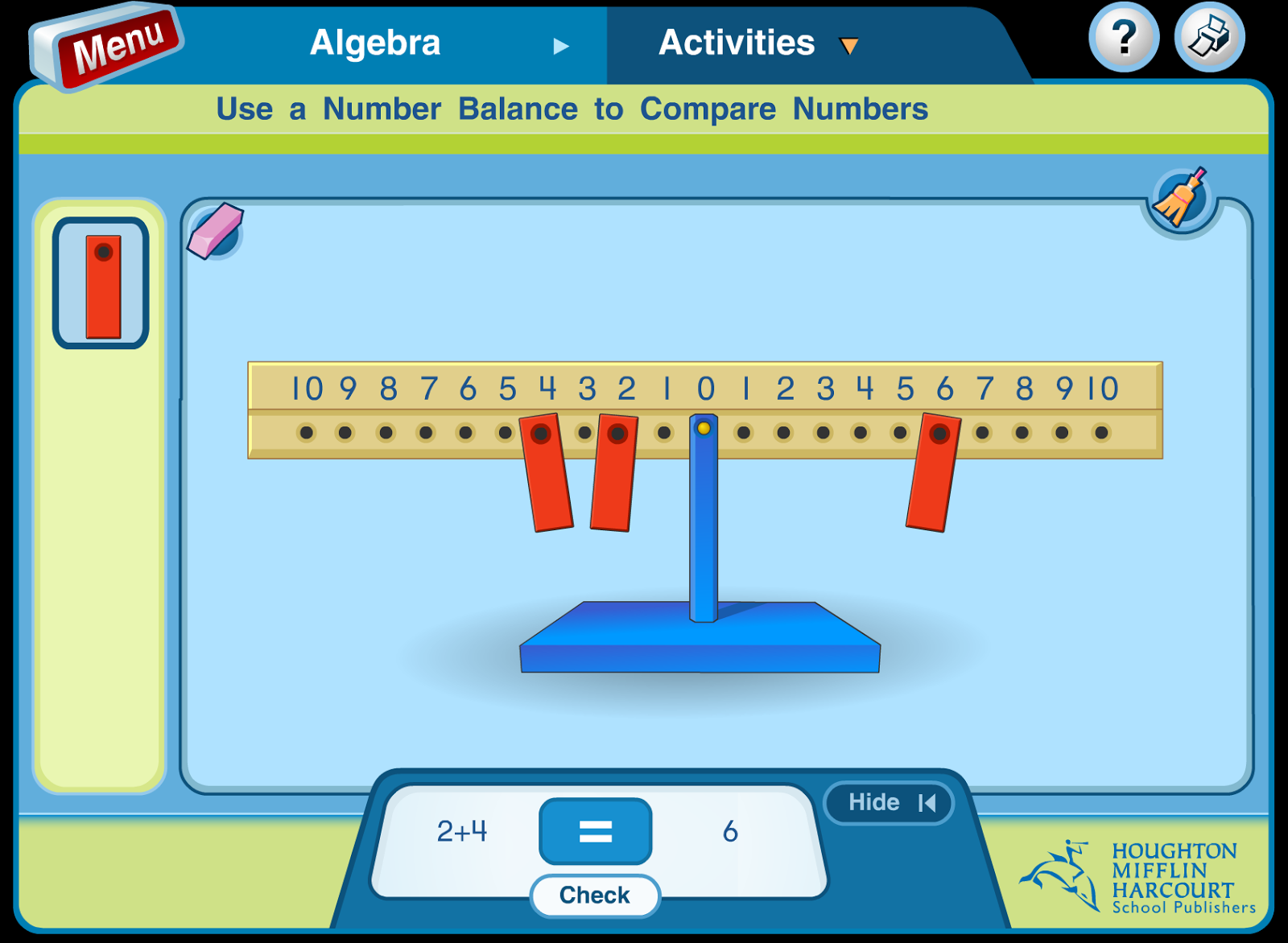
Think Central, a free resource from Hardcourt, offers K-12 teachers resources that accompany their paper textbooks. Our school does not use a prescribed curriculum, but still we love having access to these free resources. From basic math concepts to middle-grade geometry and algebra, Think Central is thorough (remember - it's intended to supplement a textbook so it has a HUGE catalog of resources).
I really like these manipulatives and workspaces because within each resource there are lots of bells and whistles. The different options offered within each section closely matches specific skills an strategies introduced in the classroom. These manipulatives would be perfect for a mini-lesson!

Although we try to do most of our number talks mentally, I do love pulling out the number balance for 1st grade algebra. This can be such an abstract concept for my 1st grades and being able to easily manipulate a scale (without having to make sure it is initially balanced) helps simply balancing equations!

Math Learning Center
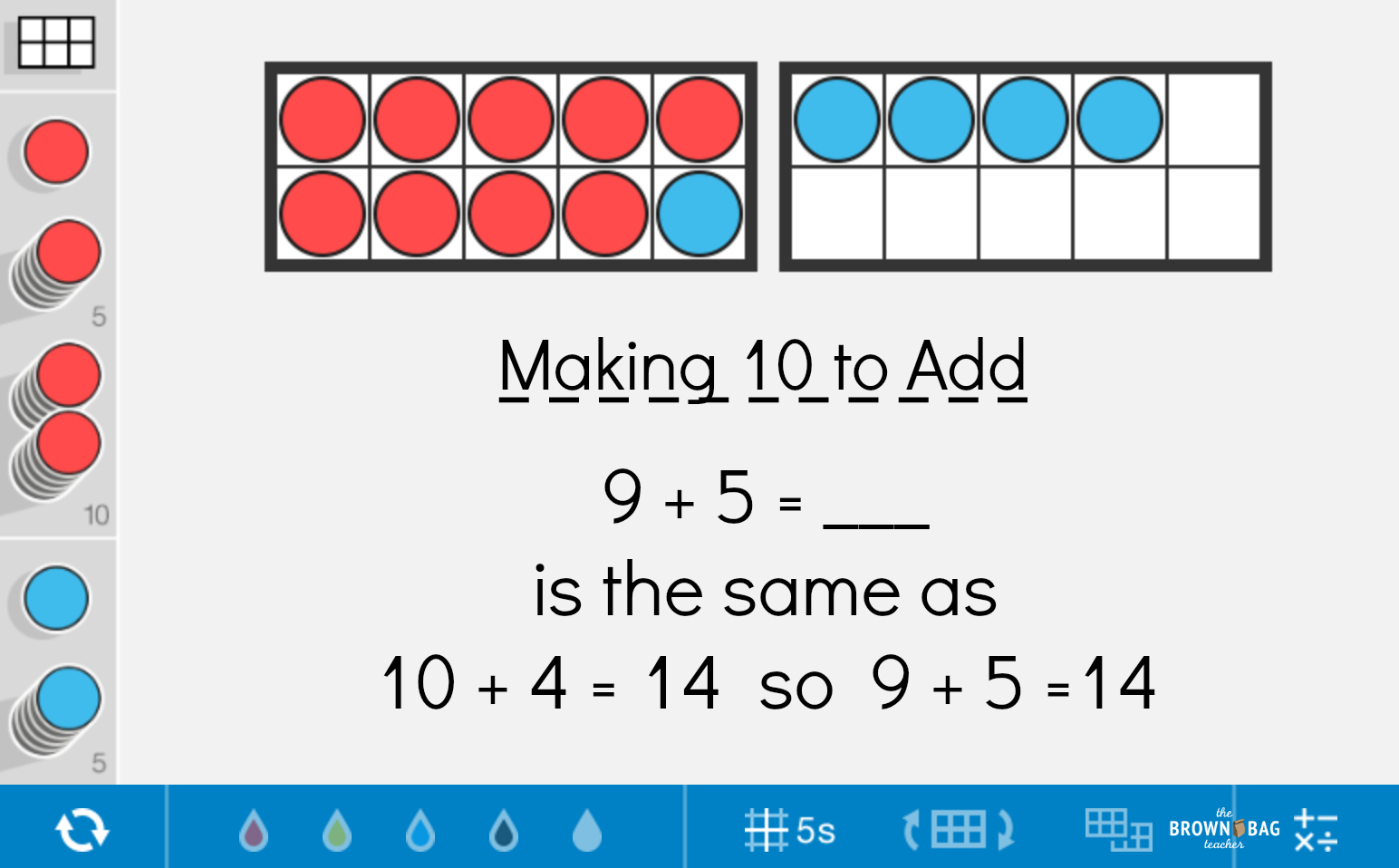
The Math Learning Center again offers FREE web and app-based manipulatives - with the best resources for building number sense. The Math Learning Center provides easy to use number-sense building manipulatives - abaci, ten frames, hundreds charts, etc.
Personally, this is the most visually appealing of the online manipulatives The colors are bold allowing students to visually differentiate between numbers and concepts. Plus, the bottom dashboard makes flipping, copying, and writing on the screen simple.

Glencoe Manipulative Library
Glencoe has an awesome collection of grade-specific thinking mats named "backgrounds" that you can interchange with a huge bank of manipulatives. From Part, Part, Whole mats to fraction unit tiles, Glencoe has ALL the materials needed to demonstrate Common Core math strategies and concepts. There aren't as many bells and whistles (pens, markers, flexibility) but in terms of content, it's thorough.
Interactive 100s Chart
For the first few weeks of school our 1st grade focus is recognizing number patterns on the 100s chart, as well as, 'before' and 'after'. My go-to 100's chart is SPLAT online! We turn this online resource into a game playing as a class on our SMART Board. Using different paint colors, students can visualize patters on the chart. We also played that students would take turns making number puzzles, "I'm think of a number that is one more than 15." Everyone would circle it on their 100s chart (at their desk using a dry erase marker) and then, one special friend would SPLAT a number on the board.
A Number Line (Open and Closed)
A number line is such a valuable tool especially as I am weaning my 1st grade friends off of their fingers for counting. It offers familiarly and comfort but allows students to work with larger numbers. EduPlace's Number Line is one of my go-to resources, because of its flexibility. (1) The number line continues to any number by clicking the black arrows...even negative numbers (2) Hops can be made in any increments which makes it great for introducing open number lines. As students become more comfortable with the number line, they can take larger hops (2, 5, 10, etc). This is a perfect number line to explore number relationships and compose/decompose numbers!
Online manipulatives can offer a perfect transition from concrete to representational math thinking. They can provide an important scaffold in math thinking and offer students a way show their thinking when words or numbers aren't just-right. I've shared some of my favorite online manipulatives and would love your perspective. What are your go-to ways to use online math manipulatives? What are your favorite websites or resources? I'm always looking for other resources and love to hear what works in your classroom!